Indian Railways Has Provided Safety Fencing Along 19,700 km of Tracks: What It Means for Infrastructure & Fencing Demand
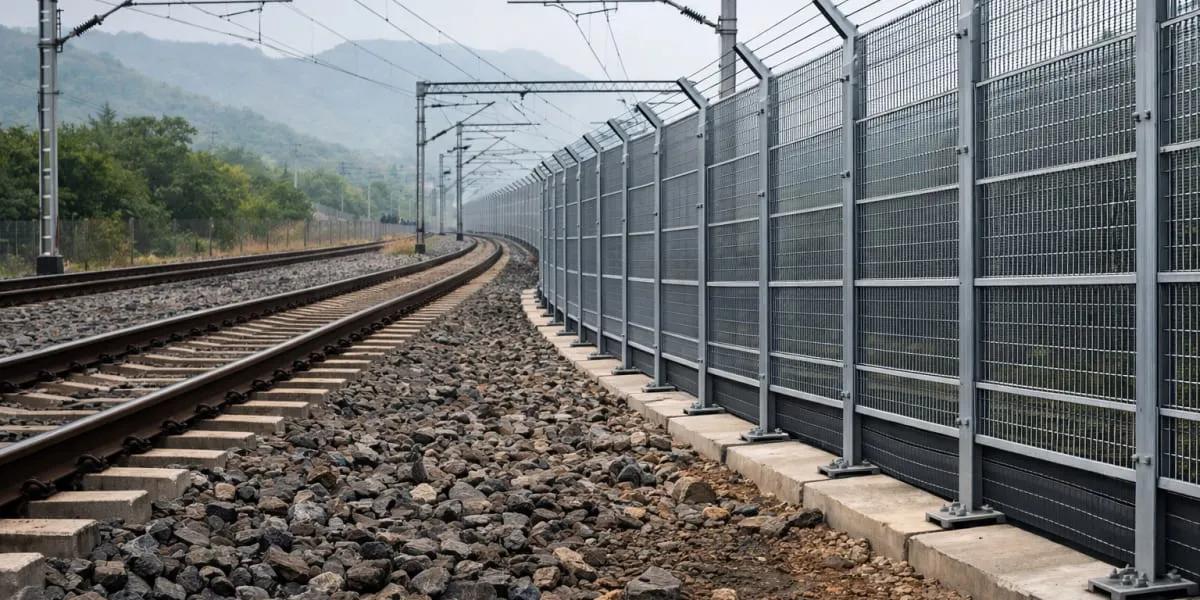
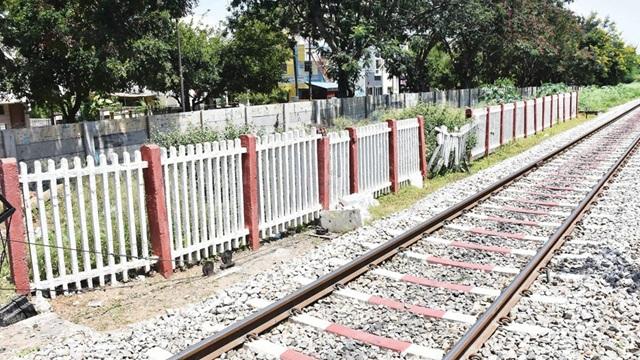
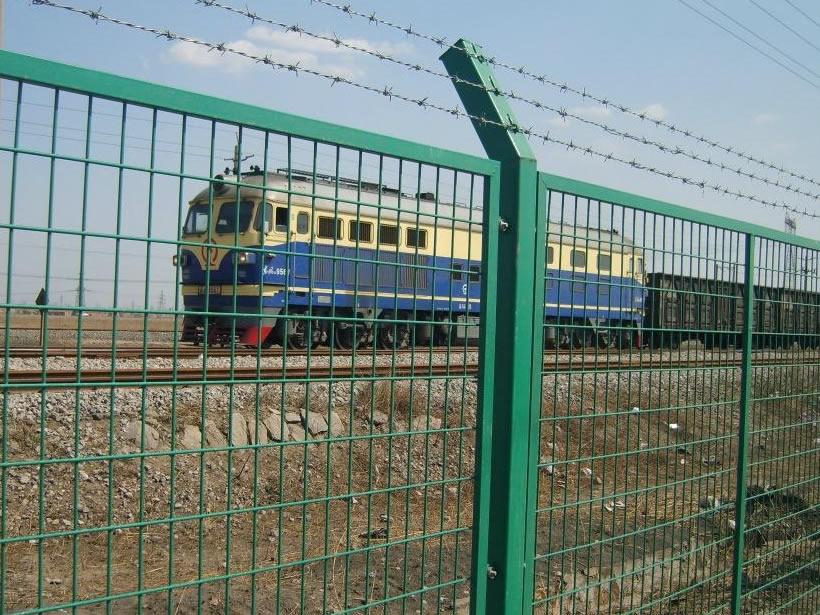
Indian Railways has provided approximately 19,700 km of safety fencing along railway tracks as part of measures aimed at preventing trespassing and supporting safer train operations, according to the Ministry of Railways.
The latest figure was provided by Railway Minister Ashwini Vaishnaw in a Lok Sabha reply on 12 August 2026. The Ministry says safety fencing is being used along railway routes and at vulnerable locations, while fencing is also being provided around pedestrian subways to help manage crossings by pedestrians, cattle and smaller vehicles.
This is a significant development for India's infrastructure sector because railway fencing is not simply a small site-security requirement. At this scale, it represents a major infrastructure component involving large-area perimeter protection, material standardisation, fabrication, logistics and project-based installation.
5
Indian Railways Has Now Provided 19,700 km of Safety Fencing
According to the latest Ministry of Railways release, approximately 19,700 km of fencing has been provided along railway tracks across the Indian Railways network.
The fencing programme forms part of broader railway safety measures intended to reduce unauthorised access to railway tracks and improve operational safety.
The Ministry's March 2026 update had reported approximately 16,398 km of fencing provided across railway zones.
The latest August figure therefore represents a substantial increase from the March position.
However, the two figures should be treated as different reporting dates, rather than interpreted as a precise month-by-month construction rate.
Why Is Indian Railways Installing Safety Fencing?
Railway tracks are high-risk environments.
Unauthorised pedestrian access, cattle movement and other forms of trespassing can create safety risks for railway operations.
The Ministry says fencing is being provided particularly on routes where the permitted train speed exceeds 110 kmph, as well as at other vulnerable locations.
The objective is straightforward:
Create a physical separation between railway operations and surrounding public or animal movement.
This becomes increasingly important as railway infrastructure supports higher operating speeds and greater train frequency.
Fencing Is Also Being Used Around Pedestrian Subways
The latest Ministry update highlights another application.
Safety fencing is also being provided at pedestrian subways to facilitate controlled crossing of railway alignments by pedestrians, cattle and smaller vehicles.
This demonstrates that railway fencing isn't limited to the boundary of a railway property.
It can also form part of a wider safety system around locations where people or animals interact with railway infrastructure.
Which Railway Zones Already Have Extensive Fencing?
The Ministry's March 2026 data provides a useful picture of the scale of fencing already installed.
The highest reported coverage included:
- North Central Railway: 2,721 km
- South Central Railway: 2,326 km
- Western Railway: 2,257 km
- West Central Railway: 1,415 km
- North Western Railway: 1,539 km
The March 2026 release reported a total of 16,398 km across railway zones at that time.
The latest August update subsequently placed the total at approximately 19,700 km.
Why This Matters for Gujarat
Gujarat is particularly relevant to railway infrastructure because it has an extensive and strategically important railway network serving:
- Industrial areas
- Ports
- Manufacturing clusters
- Logistics centres
- Major cities
- Freight corridors
- Passenger routes
The Western Railway zone alone had reported 2,257 km of safety fencing in the March 2026 Ministry data.
That figure does not mean all of this fencing is located within Gujarat, because the Western Railway zone covers more than one state.
Therefore, it would be inaccurate to attribute the entire 2,257 km figure to Gujarat.
What the data does establish is that fencing is already a substantial component of railway safety infrastructure within the Western Railway network.
Why Large-Scale Fencing Requires More Than a Product
A project involving hundreds or thousands of kilometres of fencing cannot be approached like a conventional small fencing order.
Large infrastructure programmes need suppliers that can manage:
Consistent Specifications
Fencing needs to meet the specifications established for the relevant project.
Bulk Production
Large linear infrastructure projects can require substantial quantities of fencing material.
Repeat Supply
Construction and installation can happen in phases, creating recurring procurement requirements.
Logistics
Fencing material has to be transported across potentially large geographic distances.
Project Scheduling
Material availability needs to align with civil works and installation schedules.
For infrastructure contractors, these factors can be just as important as the initial material quotation.
Chain Link Fencing and Infrastructure Perimeters
Chain link fencing is one type of perimeter solution commonly used across industrial, commercial and infrastructure environments.
Its open mesh structure can provide a physical barrier while maintaining visibility.
Depending on the project's specifications and security requirements, perimeter fencing systems can be considered for:
- Industrial plots
- Factories
- Warehouses
- Utility facilities
- Solar projects
- Infrastructure sites
- Construction sites
- Large institutional properties
The specific fencing system used for a railway project, however, must be determined by the railway authority's technical specifications and the requirements of the individual project.
Why Fencing Specification Matters
When purchasing fencing for a large project, buyers should not compare suppliers solely on price.
Important parameters can include:
- Wire diameter
- Mesh dimensions
- Fence height
- Protective coating
- Post specifications
- Support structure
- Total running length
- Installation requirements
- Transportation
- Project environment
For an industrial or infrastructure buyer, a cheaper quotation may not represent a lower total project cost if the specification is different or the supplier cannot maintain consistent supply.
Safety Fencing Is Part of a Larger Infrastructure System
Railway fencing illustrates an important point about modern infrastructure.
A railway corridor isn't simply:
Track + trains
It is an interconnected system involving:
- Track
- Bridges
- Culverts
- Stations
- Signalling
- Electrification
- Drainage
- Roads
- Pedestrian crossings
- Safety infrastructure
- Perimeter protection
Fencing is therefore one component of the larger civil and safety infrastructure required to operate a railway network safely.
What This Means for India's Fencing Industry
The latest 19,700-km figure demonstrates the scale at which fencing is being deployed across a national infrastructure network.
For fencing manufacturers and suppliers, projects of this nature place emphasis on:
Production capacity → consistent specifications → bulk availability → logistics → delivery
The same principles apply to other large perimeter projects, including industrial parks, manufacturing facilities, warehouses, logistics hubs and renewable-energy installations.
This is particularly relevant as India's industrial and infrastructure development continues to expand.
What This Means for Gujarat's Industrial Projects
Gujarat continues to develop large industrial and infrastructure assets across multiple regions.
Factories, warehouses, industrial estates, solar parks, logistics facilities and major infrastructure projects can all require perimeter-security systems.
For these projects, buyers often need fencing that can be supplied in substantial quantities and delivered according to construction schedules.
Sachi Steel's Industrial Fencing Solutions are part of its wider construction-material portfolio.
The company also supplies Chain Link Fencing for relevant perimeter applications.
These existing product capabilities allow contractors to evaluate fencing alongside other construction requirements.
Fencing Alongside Reinforcement and Construction Materials
Large industrial and infrastructure projects rarely require fencing in isolation.
A single project may require reinforcement and site-infrastructure materials at different stages.
Depending on project specifications, contractors may need:
- TMT reinforcement
- Binding wire
- Weld mesh
- Bore pile cages
- Cut & Bend reinforcement
- Couplers
- Fencing
Sachi Steel's portfolio includes Sachi Wires, Weld Mesh, Bore Pile Cages, Tata Tiscon TMT Bars, Tata Tiscon Couplers and Cut & Bend Services.
For contractors managing multiple construction packages, having several related material categories available through one supplier can simplify procurement coordination.
Sachi Steel's Experience in Fencing and Construction Materials
Sachi Steel's fencing offering sits within a wider construction-material ecosystem developed through the Sachi Group.
The group has an established history in Gujarat's steel and construction sector, including more than 20 years of Tata Tiscon distribution experience through Sachi Agency.
Sachi Steel Solutions Pvt. Ltd. was established in 2012, developing ready-to-use reinforcement solutions including Cut & Bend, Stirrups, Columns, Beams, Piles and Mesh.
Sachi Wires was subsequently introduced in 2017, with products including binding wire, weld mesh and chain link.
This progression is relevant to large infrastructure procurement because fencing is part of a broader construction ecosystem rather than an isolated product category.
Manufacturing and Bulk Supply Matter for Large Fencing Projects
A large fencing requirement can involve substantial quantities of material and long delivery distances.
For a supplier, the ability to support the project depends on several factors.
Production Capability
The supplier needs sufficient manufacturing capability to handle the required order volume.
Consistency
Large projects require material that remains consistent across multiple batches.
Delivery
Fencing material needs to reach the project location according to the installation programme.
Repeat Orders
Long infrastructure projects may require additional quantities as construction progresses.
Sachi Steel's manufacturing and supply ecosystem is designed to support project-oriented construction-material requirements.
We are deliberately not stating an unsupported numerical factory production capacity here. Actual capacity should be confirmed against the specific project and current production planning.
What Contractors Should Ask a Fencing Supplier
Before placing a large infrastructure fencing order, procurement teams should clarify:
What fencing specification is required?
Confirm wire, mesh, height, coating and support-system requirements.
What is the total running length?
Large projects should calculate the full perimeter or corridor requirement.
Is installation included?
Material supply and installation may be separate contracts.
What is the delivery schedule?
Confirm whether supply will happen in one shipment or multiple phases.
Can the supplier handle repeat requirements?
Infrastructure projects can change during construction, so repeat-order capability matters.
Is transportation included?
For large quantities, logistics can materially affect the delivered project cost.
The Broader Infrastructure Trend
The 19,700-km figure is part of a broader railway-modernisation programme in which safety, capacity and infrastructure quality are receiving increasing attention.
The Ministry's March 2026 release specifically linked fencing to routes with permitted speeds above 110 kmph and vulnerable locations. It also reported a ₹209.38 crore sanctioned project for approximately 290 km of safety fencing on the Lonavala–Pune–Daund route, showing that fencing can itself constitute a major standalone infrastructure package.
This demonstrates that perimeter safety is increasingly being treated as a planned infrastructure component rather than an afterthought.
What the 19,700-km Figure Tells Us
The latest Ministry data provides three important takeaways.
Railway Safety Is Being Addressed at Network Scale
Approximately 19,700 km of fencing has already been provided across Indian Railways.
Fencing Has Multiple Safety Applications
It is being used along railway tracks as well as around pedestrian subways and vulnerable locations.
Large-Scale Fencing Requires Organised Supply
At national infrastructure scale, fencing requires consistent manufacturing, bulk supply, logistics and project coordination.
That lesson applies equally to Gujarat's industrial and infrastructure construction sector.
Frequently Asked Questions
How much railway track has been fenced in India?
The Ministry of Railways reported approximately 19,700 km of safety fencing along railway tracks as of August 2026.
Why is Indian Railways installing fencing?
Safety fencing is being provided to prevent trespassing and support safe train operations, particularly on higher-speed routes and at vulnerable locations.
Is fencing being installed only along railway boundaries?
No. The Ministry also says safety fencing is being provided at pedestrian subways to help manage crossings by pedestrians, cattle and smaller vehicles.
How much fencing had been installed earlier in 2026?
The Ministry reported 16,398 km of fencing across railway zones in its March 2026 update.
Is the 19,700-km figure specific to Gujarat?
No. It is the figure reported for Indian Railways nationally. The Ministry's March data separately provides zone-wise figures, including 2,257 km for Western Railway, but that zone is not equivalent to Gujarat alone.
Can chain link fencing be used for infrastructure projects?
Chain link fencing can be suitable for various industrial and infrastructure perimeter applications, depending on the project's technical and security requirements. The exact fencing specification should always be determined by the project's requirements.
Conclusion
Indian Railways' latest announcement that approximately 19,700 km of railway tracks have been provided with safety fencing highlights the scale at which perimeter protection is becoming part of modern infrastructure development.
The programme is primarily a railway-safety measure, designed to reduce trespassing and improve operational safety. But it also demonstrates the scale of manufacturing, procurement, logistics and installation required when fencing becomes part of major infrastructure programmes.
For Gujarat's construction sector, the development is particularly relevant as the state continues to expand its industrial, logistics, renewable-energy and infrastructure footprint.
For large projects, the right fencing supplier needs to offer more than a product.
The real requirements are consistent specifications, production capability, bulk availability, reliable delivery and the ability to support a project through multiple construction stages.
Sachi Steel's Industrial Fencing and Chain Link Fencing form part of its broader construction-material ecosystem, alongside reinforcement, mesh, wire, fabrication and foundation-related products.
The railway fencing programme is a useful reminder of where infrastructure procurement is heading: larger projects, larger quantities and greater emphasis on organised, reliable supply.
Official Sources
- Ministry of Railways / PIB — Safety Fencing Along 19,700 km of Railway Tracks, 12 August 2026
- Ministry of Railways / PIB — Safety Fencing Along Railway Tracks, March 2026